Summary
Max Erik Tegmark (born 5 May 1967) is a Swedish-American physicist, machine learning researcher and author.
He is best known for his book Life 3.0 about what the world might look like as artificial intelligence continues to improve. Tegmark is a professor at the Massachusetts Institute of Technology and the president of the Future of Life Institute.
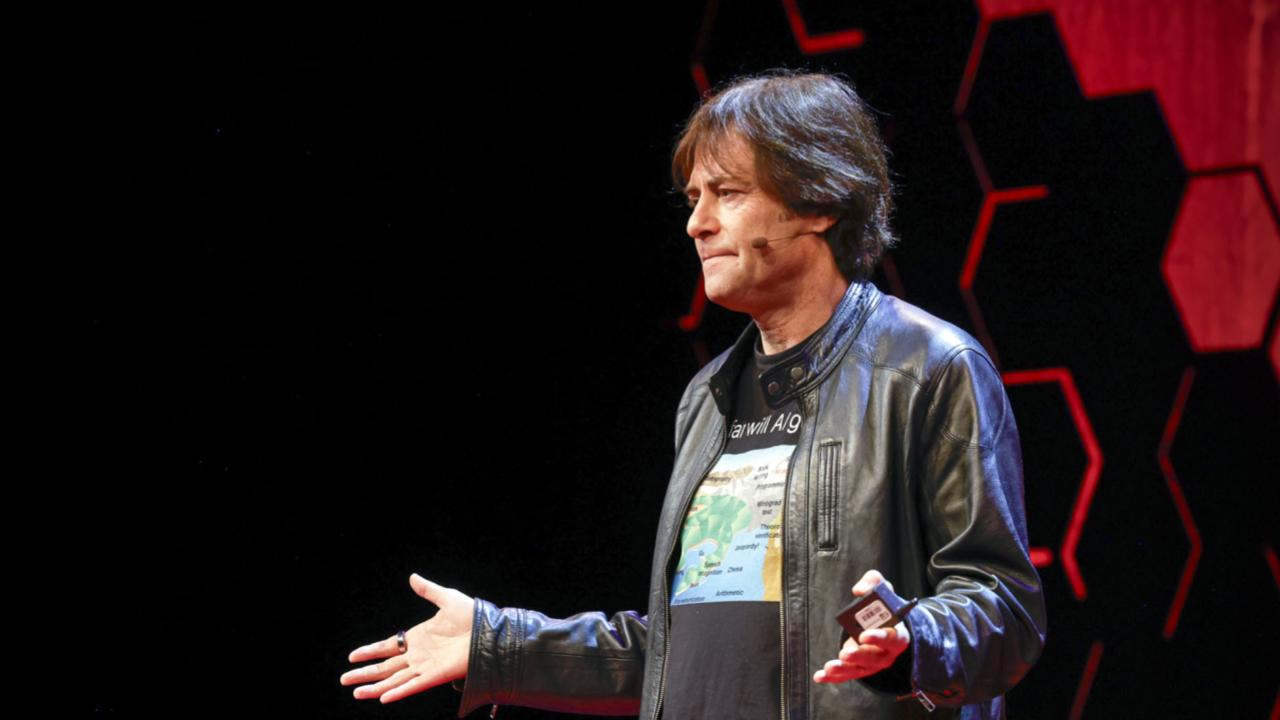
Ted Talk – 05/07/2018 (17:15)
Research focuses on linking physics and machine learning: using AI for physics and physics for AI.
Many artificial intelligence researchers expect AI to outsmart humans at all tasks and jobs within decades, enabling a future where we’re restricted only by the laws of physics, not the limits of our intelligence. MIT physicist and AI researcher Max Tegmark separates the real opportunities and threats from the myths, describing the concrete steps we should take today to ensure that AI ends up being the best — rather than worst — thing to ever happen to humanity.
OnAir Post: Max Tegmark
News
- Artificial intelligence that is smarter than humans being built like “agents” could prove dangerous amid lack of clarity over controls, two of of the world’s most prominent AI scientists told CNBC.
- Yoshua Bengio and Max Tegmark warned of the dangers of uncontrollable AI.
- For Tegmark, the key lies in so-called “tool AI” — systems that are created for a specific, narrowly-defined purpose, without serving as agents.
Artificial general intelligence built like “agents” could prove dangerous as its creators might lose control of the system, two of of the world’s most prominent AI scientists told CNBC.
In the latest episode of CNBC’s “Beyond The Valley” podcast released on Tuesday, Max Tegmark, a professor at the Massachusetts Institute of Technology and the President of the Future of Life Institute, and Yoshua Bengio, dubbed one of the “godfathers of AI” and a professor at the Université de Montréal, spoke about their concerns about artificial general intelligence, or AGI. The term broadly refers to AI systems that are smarter than humans.
Suppose a large inbound asteroid were discovered, and we learned that half of all astronomers gave it at least 10% chance of causing human extinction, just as a similar asteroid exterminated the dinosaurs about 66 million years ago. Since we have such a long history of thinking about this threat and what to do about it, from scientific conferences to Hollywood blockbusters, you might expect humanity to shift into high gear with a deflection mission to steer it in a safer direction.
Sadly, I now feel that we’re living the movie “Don’t look up” for another existential threat: unaligned superintelligence. We may soon have to share our planet with more intelligent “minds” that care less about us than we cared about mammoths. A recent survey showed that half of AI researchers give AI at least 10% chance of causing human extinction. Since we have such a long history of thinking about this threat and what to do about it, from scientific conferences to Hollywood blockbusters, you might expect that humanity would shift into high gear with a mission to steer AI in a safer direction than out-of-control superintelligence. Think again: instead, the most influential responses have been a combination of denial, mockery, and resignation so darkly comical that it’s deserving of an Oscar.
About
Physics Bio
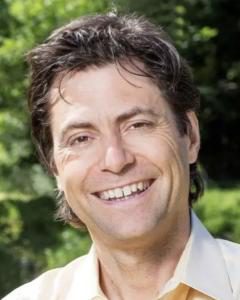
A native of Stockholm, Tegmark left Sweden in 1990 after receiving his B.Sc. in Physics from the Royal Institute of Technology (he’d earned a B.A. in Economics the previous year at the Stockholm School of Economics). His first academic venture beyond Scandinavia brought him to California, where he studied physics at the University of California, Berkeley, earning his M.A. in 1992, and Ph.D. in 1994.
After four years of west coast living, Tegmark returned to Europe and accepted an appointment as a research associate with the Max-Planck-Institut für Physik in Munich. In 1996 he headed back to the U.S. as a Hubble Fellow and member of the Institute for Advanced Study, Princeton. Tegmark remained in New Jersey for a few years until an opportunity arrived to experience the urban northeast with an Assistant Professorship at the University of Pennsylvania, where he received tenure in 2003.
He extended the east coast experiment and moved north of Philly to the shores of the Charles River (Cambridge-side), arriving at MIT in September 2004. He is married to Meia-Chita Tegmark and has two sons, Philip and Alexander.
Tegmark is an author on more than two hundred technical papers, and has featured in dozens of science documentaries. He has received numerous awards for his research, including a Packard Fellowship (2001-06), Cottrell Scholar Award (2002-07), and an NSF Career grant (2002-07), and is a Fellow of the American Physical Society. His work with the SDSS collaboration on galaxy clustering shared the first prize in Science magazine’s “Breakthrough of the Year: 2003.”
For more on his research, publications, and students, or his fun articles, goofs, and photo album, please visit Personal home page.
Source: MIT webpage
Future of Life Institute Bio
Max Tegmark is a professor doing AI and physics research at MIT as part of the Institute for Artificial Intelligence & Fundamental Interactions and the Center for Brains, Minds and Machines. He is the author of over 300 publications as well as the New York Times bestsellers “Life 3.0: Being Human in the Age of Artificial Intelligence” and “Our Mathematical Universe: My Quest for the Ultimate Nature of Reality”. His most recent AI safety research focuses on mechanistic interpretability and guaranteed safe AI, and he also researches news bias detection with machine-learning. Max is a Fellow of the American Physical Society and holds a gold medal from the Royal Swedish Academy of Engineering Science. Time Magazine named him one of the 100 Most Influential People in AI 2023. He is a serial founder of non-profits, including the Future of Life Institute, the Foundational Questions Institute and Improve the News Foundation.
Source: FLI webpage
Web Links
Videos
How to Keep AI Under Control
November 2, 2023 (12:10)
The current explosion of exciting commercial and open-source AI is likely to be followed, within a few years, by creepily superintelligent AI – which top researchers and experts fear could disempower or wipe out humanity. Scientist Max Tegmark describes an optimistic vision for how we can keep AI under control and ensure it’s working for us, not the other way around.
More Information
Wikipedia



Max Tegmark (born 5 May 1967[1][better source needed]) is a Swedish-American academic physicist, machine learning researcher, and published popular author.[2][better source needed] Originally a cosmologist—Tegmark was elected a Fellow of the American Physical Society in 2012 for his contributions to that field[3]—his work has moved toward a focus on AI, and he is a current professor of physics at the Massachusetts Institute of Technology, and is president of the independent Future of Life Institute,[4][5][better source needed] whose stated mission is to “steer transformative technologies away from extreme, large-scale risks and towards benefiting life.”[6] Toward the aim of its mitigating existential risks from AI, the Institute has received funding from Musk (who, as of 2015, sat on its scientific advisory board).[7][8][9][needs update]
Tegmark is also known for his book Life 3.0, which addresses what the world might look like as artificial intelligence continues to develop.[not verified in body] He and his organizations are an academic proponent of risk-aware perspectives on AI,[7][9] and Tegmark is a supporter of the effective altruism movement.[10][better source needed]
Early life
Max Erik Tegmark was born Max Erik Shapiro[11][12][13]: p. no. unstated [better source needed] in Stockholm, Sweden,[citation needed] on 5 May 1967,[1][better source needed] to Karin Tegmark[clarification needed] and mathematician Harold S. Shapiro.[12][full citation needed][better source needed] While studying at the University of California at Berkeley, he adopted his mother’s surname Tegmark, as there were many Shapiros in astronomy, including one of his professors.[13]: p. no. unstated [full citation needed][better source needed] While in high school, Tegmark and a friend, Magnus Bodin, created and sold a word processor, Teddy, written in machine code for the Swedish eight-bit computer ABC 80 as a summer project, which was marketed “in a very modest manner” by Liber Läromedel,[11][better source needed] and—per Tegman’s autobiographical description—he also coded a 3D Tetris-like game called Frac.[13]: p.55 [better source needed]
Tegmark left Sweden after receiving his B.A. in economics in 1989 at the Stockholm School of Economics,[citation needed] and an M.S.E in engineering physics from the KTH Royal Institute of Technology in 1990.[citation needed] He next studied physics at the University of California, Berkeley, earning his M.A. in 1992, and Ph.D. in 1994 under the supervision of Joseph Silk.[citation needed][14][independent source needed]
Career
Tegmark began an assistant professor at the University of Pennsylvania,[when?][citation needed] receiving tenure in 2003.[citation needed] In 2004, he joined the Massachusetts Institute of Technology‘s department of physics.[citation needed][needs update]
As of 2023, Tegmark was a professor of physics at the Massachusetts Institute of Technology,[4][better source needed] and is president of the independent Future of Life Institute,[5][better source needed] which he co-founded with Anthony Aguirre, a professor at the University of California, Santa Cruz.[9]
Research
An earlier phase of Tegman’s research focused on cosmology, wherein he combined theoretical and experimental work (the latter, often in collaboration) to constrain cosmological models and their free parameters.[citation needed] He has developed data analysis tools based on information theory and applied them to cosmic microwave background experiments such as COBE, QMAP, and WMAP,[citation needed] and to galaxy redshift surveys such as the Las Campanas Redshift Survey, the 2dF Survey and the Sloan Digital Sky Survey.[citation needed]
Tegmark, Daniel Eisenstein, and Wayne Hu, writing in The Astrophysical Journal in 1998, introduced[original research?] the idea of using baryon acoustic oscillations as a standard ruler[jargon] (here and following, see list of publications).[citation needed][15][better source needed] His 2000 paper in Physical Review E, on quantum decoherence of neurons, concluded that decoherence is too rapid for Roger Penrose‘s orchestrated objective reduction (“quantum microtubule”) model of consciousness to be viable.[16] Working with Angelica de Oliveira-Costa and Andrew Hamilton, Tegmark and his collaborators reported, in Physical Review D in 2003, discovery[original research?] of the anomalous multipole alignment in the WMAP data,[jargon] sometimes referred to as the “axis of evil“.[citation needed][15][better source needed] With Anthony Aguirre, he developed[original research?] what he described in their 2011 Physical Review D paper, as “A Cosmological Interpretation of Quantum Mechanics“.[citation needed] Tegmark also formulated[original research?] “The Mathematical Universe Hypothesis“, in a paper by that name published in Foundations of Physics in 2008, wherein he postulated the physical existance of all structures predicted mathematically.[17][better source needed][18][full citation needed][19]
As of this date,[when?] Tegmark’s research focuses on machine learning.[citation needed] In April 2024, Tegmark, and a team of 7—including MIT/CalTech trainees Ziming Liu, Yixuan Wang, and Sachin Vaidya, and CalTech mathematician Thomas Hou, MIT physicist Marin Soljačić, and Northeastern University physicist James Halverson and mathematician Fabian Ruehle—presented a multiyear effort on their development of a new class of neural networks, Kolmogorov-Arnold Networks (KANs), which differ fundamentally from the current, most widely applied multilayer perceptron design of networks; theirs is a new application based on the Kolmogorov–Arnold representation theorem that had been rejected decades earlier as impossible to apply to machine learning.[20][21]
As described in their organizational promotional materials, Tegmark led a research project at MIT, beginning in 2020, focused on the application of machine learning to the classification of news reports.[22] They called the AI-driven news aggregator “Improving the News”, and it involved early participants Khaled Shehada, Mindy Long, and Arun Wongprommoon (toward the initial aggregator), and Tim Woolley (on scaling).[22][non-primary source needed][23][non-primary source needed]
To maintain and scale the work, Tegmark and his co-worker and wife, Meia Chita-Tegmark, founded the eponymous Improve the News Foundation (ITN) as an “apolitical” 501(c)(3) in October 2020, with the stated mission of “[e]mpower[ing] people to rise above controversies and understand the world in a nuanced way.”[23] The ITN product was rebranded as “Verity News” in 2023.[citation needed]
Under Tegmark’s founding leadership, the Future of Life Institute has pursued a stated mission to “steer transformative technologies away from extreme, large-scale risks and towards benefiting life.”[6] It has subsequently aimed, as variously described, at dedicating itself to “research aimed at ‘mitigate[ing] existential risks facing humanity‘… specifically those related to our ongoing progress towards AI… approach[ing] human capabilities”,[7] and more generally to researching “issues… related to the challenges technology presents… to ultimately develop a more optimistic vision for how humanity can take control of the future.”[9][7][24][verification needed] A co-founding faculty member was University of California, Santa Cruz professor Anthony Aguirre, and its board-level leadership has included Elon Musk, Skype– and Kazaa-founder Jaan Tallinn, as well as celebrities (Alan Alda and Morgan Freeman), and individual graduate students (including his wife, Meia Chita-Tegmark, then a Boston University PhD-student).[9] Tegmark and the organization are academic proponents of approaches and views that are aware and wrestle with the potential risks associated with the development of AI;[7] the Institute has received substantial funding from Musk.[7]
Controversy
In 2023, Tegmark was the focus of a controversy when he was alleged to have signed a letter of intent on behalf of the Future of Life Institute for a $100,000 grant—ultimately rejected—to far-right media outlet Nya Dagbladet, an outlet for which Tegmark’s brother wrote,[25][26] an allegation to which the Institute formally responded.[27] Tegmark later said that the Institute “ultimately decided to reject it because of what our subsequent due diligence uncovered”, that they rejected it long before the media became involved, and that the institute “finds Nazi, neo-Nazi or pro-Nazi groups or ideologies despicable and would never knowingly support them”.[28] An official statement from the Future of Life Institute further expands on this: “FLI finds groups or ideologies espousing antisemitism, white supremacy, or racism despicable and would never knowingly support any such group”.[27]
Awards and recognition
Tegmark was elected Fellow of the American Physical Society in 2012 for, according to the citation, “his contributions to cosmology, including precision measurements from cosmic microwave background and galaxy clustering data, tests of inflation and gravitation theories, and the development of a new technology for low-frequency radio interferometry”.[3]
He was awarded the Royal Swedish Academy of Engineering Science’s Gold Medal in 2019 for, according to the citation, “his contributions to our understanding of humanity’s place in the cosmos and the opportunities and risks associated with artificial intelligence. He has courageously tackled these existential questions in his research and, in a commendable way, succeeded in communicating the issues to a wider public.”[29]
In 2023, Time named Tegmark one of the 100 most influential people in AI.[30]
Published works
Books
- Tegmark, Max (2014). Our Mathematical Universe.[full citation needed] In this work, Tegmark suggests that his theory is simple in its having no free parameters at all, and that in structures complex enough to contain self-aware substructures (SASs), these SASs will subjectively perceive themselves as existing in a physically “real” world.[according to whom?][citation needed]
Tegmark’s “mathematical universe” hypothesis has been criticized by mathematical physicist Edward Frenkel (and other scientists[citation needed])[weasel words] as being both overly speculative and unscientific in nature—Frenkel characterizing it as closer to “science fiction and mysticism” than “the realm of science.”[31]
- Tegmark, Max (2017). Life 3.0: Being Human in the Age of Artificial Intelligence.[full citation needed][clarification needed]
Select articles
- Eisenstein, Daniel J.; Hu, Wayne; Tegmark, Max (1998). “Cosmic Complementarity: and from Combining Cosmic Microwave Background Experiments and Redshift Surveys”. The Astrophysical Journal. 504 (2): L57 – L60. arXiv:astro-ph/9805239. Bibcode:1998ApJ…504L..57E. doi:10.1086/311582. S2CID 8824919.[according to whom?]
- Tegmark, Max (1 April 2000). “The Importance of Quantum Decoherence in Brain Processes”. Physical Review E. 61 (4): 4194–4206. arXiv:quant-ph/9907009. Bibcode:2000PhRvE..61.4194T. doi:10.1103/PhysRevE.61.4194. PMID 11088215. S2CID 17140058.[according to whom?]
- Tegmark, Max; de Oliveira-Costa, Angélica; Hamilton, Andrew (1 December 2003). “High Resolution Foreground Cleaned CMB Map from WMAP”. Physical Review D. 68 (12) 123523. arXiv:astro-ph/0302496. Bibcode:2003PhRvD..68l3523T. doi:10.1103/PhysRevD.68.123523. S2CID 17981329.[according to whom?]
- Tegmark, Max (2008). “The Mathematical Universe”. Foundations of Physics. 38 (2): 101–150. arXiv:0704.0646. Bibcode:2008FoPh…38..101T. doi:10.1007/s10701-007-9186-9. S2CID 9890455.[according to whom?][18]
- Aguirre, Anthony; Tegmark, Max (3 November 2011). “Born in an Infinite Universe: A Cosmological Interpretation of Quantum Mechanics”. Physical Review D. 84 (10) 105002. American Physical Society (APS). arXiv:1008.1066. Bibcode:2011PhRvD..84j5002A. doi:10.1103/physrevd.84.105002. ISSN 1550-7998. S2CID 17341893.


Media activities
- In 2006, Tegmark was one of fifty scientists interviewed by New Scientist about their predictions for the future. His prediction: “In 50 years, you may be able to buy T-shirts on which are printed equations describing the unified laws of our universes.”[32]
- Tegmark appears in the 2007 documentary Parallel Worlds, Parallel Lives in which he is interviewed by Mark Oliver Everett, son of the founder of the many-worlds interpretation of quantum mechanics, Hugh Everett.
- Tegmark also appears in “Who’s Afraid of a Big Black Hole?”, “What Time is It?”, “To Infinity and Beyond”, “Is Everything We Know About The Universe Wrong?”, “What is Reality?” and “Which Universe Are We In?”, all part of the BBC’s Horizon scientific series of programmes.
- He appears in several episodes of Sci Fi Science: Physics of the Impossible, an American documentary television series on science which first aired in the United States on December 1, 2009. The series is hosted by theoretical physicist Michio Kaku.
- Tegmark was interviewed by Morgan Freeman in seasons 2 and 3 of Through the Wormhole in 2011–2012.
- Tegmark participated in the episode “Zooming Out” of BBC World Service‘s The Forum, which first aired on BBC Radio 4 on 26 April 2014.[33]
- In 2014, Tegmark co-authored an op-ed in The Huffington Post with Stephen Hawking, Frank Wilczek and Stuart Russell on the movie Transcendence.[34]
- In 2014, “The Perpetual Earth Program,” a play based on Tegmark’s book Our Mathematical Universe, was mounted in New York City as part of the Planet Connections Theatre Festival.[35]
- In 2014, he featured in The Principle, a documentary examining the Copernican Principle.[36]
- In 2015, Tegmark participated in an episode of Sam Harris‘ the Waking Up podcast entitled “The Multiverse & You (& You & You & You…)” where they discussed topics such as artificial intelligence and the mathematical universe hypothesis.[37]
- In 2017, Tegmark gave a talk entitled “Effective altruism, existential risk & existential hope” at the world’s largest annual conference of the effective altruism movement.[10]
- In 2017, Tegmark participated in an episode of Sam Harris‘ the Waking Up podcast entitled “The Future of Intelligence” where they discussed topics such as artificial intelligence and definitions of life.[38]
- In 2018, Tegmark took part in a conversation with podcaster Lex Fridman about Artificial General Intelligence as part of a MIT course on AGI. He was the first guest on the Lex Fridman podcast.[39] He was interviewed again on the Lex Fridman podcast in 2021[40] and in 2023.[41]
- Tegmark is interviewed in the 2018 documentary on artificial intelligence, Do You Trust This Computer?.[citation needed]
Personal life
Tegmark married astrophysicist Angelica de Oliveira-Costa in 1997, and divorced in 2009. They have two sons.[citation needed][42][independent source needed] On August 5, 2012, Tegmark married Meia Chita.[43][independent source needed]
Tegmark’s brother is the journalist Per Shapiro, who has written for the far-right, populist[clarification needed] Swedish newspaper Nya Dagbladet.[25][citation needed]
See also
References
- ^ a b Tegmark, Max & Oxford PoC Staff (8 December 2025). “Tegmark” (notable contributor biography). Oxford University Philosophy of Cosmology (Oxford PoC) program (philosophy-of-cosmology.ox.ac.uk). Retrieved 8 December 2025.
- ^ Tegmark, Max (12 December 2023). “The Universes of Max Tegmark” (Tegmark group MIT homepage). MIT.edu. Retrieved 12 December 2023.[independent source needed]
- ^ a b “APS Fellow Archive”. American Physical Society. Archived from the original on 9 May 2020. Retrieved 23 January 2013.
- ^ a b Tegmark, Max (15 March 2023). “Max Tegmark—Professor of Physics” (Tegmark MIT faculty homepage). MIT.edu. Cambridge, MA: MIT Department of Physics. Archived from the original on 15 March 2023. Retrieved 15 April 2023.[independent source needed]
- ^ a b Tegmark, Max (27 December 2023). “About Us: Max Tegmark / President…” (org. leader autobiography). FutureofLife.org. Cambridge, MA: Future of Life Institute. Retrieved 27 December 2023.[independent source needed]
- ^ a b FoLI Staff (8 December 2025). “About Us—Ourt Mission”. FutureofLife.org. Retrieved 8 December 2025.
The Future of Life Institute’s mission is to steer transformative technologies away from extreme, large-scale risks and towards benefiting life.
Note, as of that date, Max Tegmark was the President of FoLI. - ^ a b c d e f Etherington, Darrell (15 January 2015). “Elon Musk Donates $10M To Make Sure AI Doesn’t Go The Way Of Skynet”. TechCrunch. Retrieved 8 December 2025.
- ^ While mentioning existential risk as a perspective of Musk’s, the Rebecca Strong source that follows states the Institute’s aim as:
To research the issues and launch initiatives related to the challenges technology presents, and to ultimately develop a more optimistic vision for how humanity can take control of the future.
see Strong (15 January 2015), op. cit. (The Clark article in Bloomberg is broadly inaccessible.)
- ^ a b c d e Strong, Rebecca (15 January 2015). “3 Things to Know About the Elon Musk-Backed Future of Life Institute”. BostInno (bostinno.streetwise.co). Boston, MA: Streetwise Media. Archived from the original on 2 July 2015. Retrieved 8 December 2025.
Now, Musk is serving on the scientific advisory board at the… Institute and has also donated $10 million to the organization… [stating in a quoted X post that he was] ‘Funding research on artificial intelligence safety…’. / ‘Hopefully this grant program will help shift our focus from building things just because we can, toward building things because they are good for us in the long term,’ said institute co-founder Meia Chita-Tegmark on the group’s website. / The organization was founded by MIT physics professor Max Tegmark, along with UC Santa Cruz professor Anthony Aguirre. The pair also founded the Foundational Questions Institute, a research organization that explores the foundations of physics and cosmology. / Other key people with the… Institute include Jaan Tallinn, a founding engineer of Skype and Kazaa…; Boston University PhD candidate Meia Chita-Tegmark; and Harvard University PhD candidate Viktoriya Krakovna. / Two… actors serve on the advisory board: Morgan Freeman and Alan Alda.
- ^ a b Tegmark, Max (17 June 2017). Effective Altruism Global: Effective Altruism, Existential Risk and Existential Hope. YouTube.com. Retrieved 19 May 2018.[non-primary source needed][independent source needed] For archived versions, see Ghostarchive and the Wayback Machine.
- ^ a b Bodin, Magnus (21 July 2011). “Teddy—1984”. x42.com (personal website of Magnus Bodin ). self-published. Archived from the original on 21 July 2011. Retrieved 5 May 2023.[better source needed]
- ^ a b Sveriges Befolkning 1980 [Population of Sweden in 1980] (CD-ROM). 1.02. Sundbyberg, Sweden: Sveriges Släktforskarförbund [Federation of Swedish Genealogical Societies]. 2004. Event occurs at unspecified time. Retrieved 8 December 2025.[full citation needed][non-primary source needed] For a description of this geneological database, seeThorsell, Elisabeth (1 September 2004). “A New CD: The Population of Sweden in 1980”. Swedish American Genealogist. 24 (3): 22. Retrieved 8 December 2025.[non-primary source needed]
- ^ a b c Tegmark, Max (2014). Our Mathematical Universe.[full citation needed][independent source needed]
- ^ Tegmark, Max (28 May 2013). “Faculty: Max Tegmark—Professor”. MIT.edu. Archived from the original (faculty autobiography) on 28 May 2013. Retrieved 8 December 2025.[independent source needed]
- ^ a b Tegmark, Max. “Philosophy of Cosmology”. University of Oxford. Archived from the original on 16 February 2016. Retrieved 15 February 2016.[independent source needed]
- ^ Seife, Charles (4 February 2000). “Cold Numbers Unmake the Quantum Mind”. Science. 287 (5454): 791. doi:10.1126/science.287.5454.791. PMID 10691548. S2CID 33761196.
- ^ Butterfield, Jeremy (17 June 2014). “Our Mathematical Universe?”. arXiv:1406.4348v1 [physics.hist-ph]. The DOI for this un-refereed, posted draft is 10.48550/arXiv.1406.4348.[better source needed]
- ^ a b The author offered a short (3 pp.) discussion of his 50 pp. Foundations article in September 2007, in New Scientist, which appeared as a cover story, seeTegmark, M. (15 September 2007). “Shut Up and Calculate”. New Scientist. No. 2621. Retrieved 8 December 2025.[full citation needed] For an arXiv PDF of the same, see this link, accessed the same date as the preceding citation.
- ^ The title of the short discussion by Tegmark of his Foundations paper is a stated allusion to N. David Mermin’s use if the same phrase, see Tegmark (15 September 2007), op. cit., andMermin, N. David (1 May 2004). “Could Feynman Have Said This?”. Physics Today. doi:10.1063/1.1768652N. Retrieved 8 December 2025.
- ^ Nadis, Steve (11 September 2024). “Novel Architecture Makes Neural Networks More Understandable”. Quanta Magazine. Archived from the original on 11 September 2024. Retrieved 24 September 2025.
- ^ Liu, Z; Wang, Y; Vaidya, S; Ruehle, R; Halverson, J; Soljačić, Marin; Hou, TY & Tegmark M (23 April 2025). KAN: Kolmogorov–Arnold Networks. The Thirteenth International Conference on Learning Representations (ILCR). ICLR 2025 (ICLR.cc). Singapore. Retrieved 8 December 2025.
{{cite conference}}: CS1 maint: multiple names: authors list (link) Liu was the author of this work from MIT, as featured in the article by Steve Nadis in Quanta Magazine; Wang, the second author, presented the work at the conference. For the arXiv version preceding the publication, see this link, accessed same date as indicated. - ^ a b ITN Staff (14 July 2023). “Frequently Asked Questions—Who’s Behind This?”. Improve the News (ImprovetheNews.org). Archived from the original on 14 July 2023. Retrieved 8 December 2025.[non-primary source needed]
- ^ a b Verity Staff (8 December 2025). “About: What is Verity? … Who is Behind Verity?”. Verity News (Verity.News). Retrieved 8 December 2025.[non-primary source needed]
- ^ Clark, Jack (9 June 2015). “The Future of Computers is the Mind of a Toddler”. Bloomberg.com. Retrieved 8 December 2025.
- ^ a b Dalsbro, Anders & Leman, Jonathan (16 January 2023) [2023-01-13]. “Elon Musk-Funded Nonprofit Run by MIT Professor Offered to Finance Swedish Pro-Nazi Group”. Expo.se. Retrieved 8 December 2025.
{{cite web}}: CS1 maint: multiple names: authors list (link) - ^ Hume, Tim (19 January 2023). “Elon Musk-Backed Non-Profit Offered $100K Grant to ‘Pro-Nazi’ Media Outlet”. Vice News. Archived from the original on 3 May 2023. Retrieved 25 May 2023.
- ^ a b FoLI Staff (18 January 2023). “Statement on a Controversial Rejected Grant Proposal”. Future of Life Institute (FoLI). Retrieved 14 June 2023. Note, as of that date, Max Tegmark was the President of FoLI.
- ^ Nordmark, Jens & Tegmark [,Alex] (16 January 2023) [13 January 2023]. “[Linkpost] FLI Alleged to Have Offered Funding to Far Right Foundation [See deeply buried reply, from Tegmark, beginning “Here’s an official statement from FLI on rejecting the Nya Dagbladet Foundation grant proposal…]”. Forum.EffectiveAltruism.org. Retrieved 8 December 2025.
{{cite web}}: CS1 maint: multiple names: authors list (link) - ^ “Hans Dalborg, Daniel Ek, Martin Lorentzon, Lena Olving and Max Tegmark to be awarded IVA’s Gold Medals”. Royal Swedish Academy of Engineering Sciences. Archived from the original on 26 January 2021. Retrieved 24 April 2020.
- ^ “TIME100 AI 2023: Max Tegmark”. Time. 7 September 2023. Retrieved 27 December 2023.
- ^ Frenkel, Edward (14 February 2014). “Ad Infinitum”. The New York Times.
- ^ Tegmark, Max (18 November 2006). “Max Tegmark forecasts the future”. New Scientist. Archived from the original on 9 June 2015. Retrieved 1 November 2012.
- ^ “BBC Radio 4 – The Forum, Zooming Out”. BBC Radio 4. 26 April 2014. Archived from the original on 15 April 2023. Retrieved 15 April 2023.
- ^ Hawking, Stephen; Tegmark, Max; Russell, Stuart (19 April 2014). “Transcending Complacency On Superintelligent Machines”. HuffPost. Archived from the original on 8 March 2022. Retrieved 7 March 2022.
- ^ Chichester, Sarah M. (10 June 2014). “The Perpetual Earth Program”. Nytheatre.com. Archived from the original on 14 July 2014.
- ^ “The Principle (2014)”. IMDb. Archived from the original on 26 March 2016. Retrieved 30 June 2018.
- ^ “The Multiverse & You (& You & You & You…)”. Sam Harris. 23 September 2015. Archived from the original on 22 November 2015. Retrieved 22 November 2015.
- ^ Harris, Sam (27 August 2017). “The Future of Intelligence)”. Sam Harris. Archived from the original on 31 August 2017. Retrieved 27 August 2017.
- ^ “Max Tegmark: Life 3.0”. Lex Fridman. 19 April 2018. Archived from the original on 30 September 2022. Retrieved 19 January 2020.
- ^ Max Tegmark: AI and Physics | Lex Fridman Podcast #155 (Podcast). Archived from the original on 16 February 2022. Retrieved 16 February 2022.
- ^ Max Tegmark: The Case for Halting AI Development | Lex Fridman Podcast #371 (Podcast). 13 April 2023. Archived from the original on 13 April 2023. Retrieved 13 April 2023.
- ^ “Max Tegmark Homepage”. Space.mit.edu. Archived from the original on 14 June 2012. Retrieved 1 November 2012.[independent source needed]
- ^ “Welcome to Meia and Max’s wedding”. The Universes of Max Tegmark. Space.mit.edu. Archived from the original on 10 January 2014. Retrieved 10 January 2014.[independent source needed]
External links


| International | |
|---|---|
| National | |
| Academics | |
| Artists | |
| People | |
| Other | |